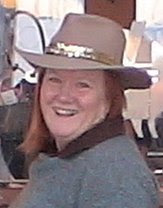
There are times when I just want to reach out an hug everyone in my blogmunity. Linda is flying to Germany to watch the women's world cup. Laura is buying a new condo. Cynthia's daughter is getting married. (I last saw her when she was about 10)
I've never met Linda or Michael IRL, and yet they are as much my good friends as anyone I HAVE physically touched.
Tig is celebrating her party's win in Thailand.
I once said that one of the curses of the internet is that we are now subjected to EVERYONE'S opinion.
One of the blessings of the internet is that we now can connect with everyone we have ever met (and liked) and many people we like but have never met.
Sunday, July 3, 2011

Sunday, June 26, 2011
Pictures of me half-naked
This Tuesday, my girlfriend and I will go to Albuquerque where I will pose for pictures in which I will be half-naked. The positioning of my arms is important. My brests must be thrust forward, my back slightly arched to show a better angle.
Why, you ask, would a 58-year-old woman do such a thing? Who would be interest in seeing such pictures.
I honestly don't know who will be looking at those pictures. But I want them to. I hope they study thos pictures throughly and intently.
And I sincerely believe that most women of my age should be doing the same thing.
So, I'm getting my annual mamogram.
I just thought it would sound more exciting this way.
Why, you ask, would a 58-year-old woman do such a thing? Who would be interest in seeing such pictures.
I honestly don't know who will be looking at those pictures. But I want them to. I hope they study thos pictures throughly and intently.
And I sincerely believe that most women of my age should be doing the same thing.
So, I'm getting my annual mamogram.
I just thought it would sound more exciting this way.
Sunday, June 5, 2011
Do we Suffer from Collective Amnesia?
Two things brought this to mind.
On Memorial day (actually the Sunday before) I was watching a 60-Minutes interview with the (then) only recipient of the Congressional Medal of Honor from the mid-East wars who was alive to receive it. He called himself an average if not medicore soldier and said that any other soldier would have done what he did. He made the comment regarding his fellow soldiers, "They all raised their hand and took the oath"
As it was meant to be, the story was touching and mildly thought-provoking -- "How heroic is the average man?" sort of item.
I recently finished reading H.W. Brands "American Dreams" This is a narrative history of the US since WWII. It ends in 2008.
Overally, the book is quite good at exxplaining what was occurring and some of the personalities and politics and facts and actions that influenced US history throughout that period.
I had purchased it because I had read his book "Traitor to his Class" regarding FDR and found it excellent and exciting.
I found, however, one glaring flaw. In discussing the period from 1963 through 1974, he mentions Vietman. He mentions the anti-war protests that almost tore the country apart. He mentions the shootings at Kent State. He discussed in passing how we became involved in Vietnam, the incident at the gulf of Tonkin, and the political corruption that plagued the South Vietnamese state.
What did he omit? What was the REAL explanation for the sometimes violent protests and demonstrations that beset the era? What were we really protesting against? And why is it that there are virtually NO protests today regarding our involvement in foreign countries?
He failed to mention in any sentence: THE DRAFT.
In retrospect, we were not protesting against America's sometimes mis-directed foreign policies. We were not protesting the attempt at "nation-building" We were not protesting the fact that the US was using military force to support a corrupt dictatorship.
We were protesting the fact that young men were being conscripted involuntarily and being sent oversees.
Look at the military 'adventures' the US has engaged in since the end of Vietnam. The protests today are political, and votes are taken in Congress. 500,000 plus do not assemble for three days on the Capital Mall to say "US OUT" Why not?
Today's military is purely volentary. In fact, given the state of employment in this country, the military is being selective about who may enlist. Today's soldiers are all willing to be soldiers.
It didn't used to be that way.
And I have to wonder, if we had a draft today, would we be involved overseas to the extent that we are?
I will not say that today's wars are any more or less moral than Vietnam was. But the fact that young men are not being forced into the military IS a more moral stance than we had previously.
Have we forgotten our outrage over Vietnam? Or is it that today we know that our brothers, our boyfriends, our sons will not be FORCED into the military.
Perhaps a volunteer army makes a voluntary war less morally repugnant.
On Memorial day (actually the Sunday before) I was watching a 60-Minutes interview with the (then) only recipient of the Congressional Medal of Honor from the mid-East wars who was alive to receive it. He called himself an average if not medicore soldier and said that any other soldier would have done what he did. He made the comment regarding his fellow soldiers, "They all raised their hand and took the oath"
As it was meant to be, the story was touching and mildly thought-provoking -- "How heroic is the average man?" sort of item.
I recently finished reading H.W. Brands "American Dreams" This is a narrative history of the US since WWII. It ends in 2008.
Overally, the book is quite good at exxplaining what was occurring and some of the personalities and politics and facts and actions that influenced US history throughout that period.
I had purchased it because I had read his book "Traitor to his Class" regarding FDR and found it excellent and exciting.
I found, however, one glaring flaw. In discussing the period from 1963 through 1974, he mentions Vietman. He mentions the anti-war protests that almost tore the country apart. He mentions the shootings at Kent State. He discussed in passing how we became involved in Vietnam, the incident at the gulf of Tonkin, and the political corruption that plagued the South Vietnamese state.
What did he omit? What was the REAL explanation for the sometimes violent protests and demonstrations that beset the era? What were we really protesting against? And why is it that there are virtually NO protests today regarding our involvement in foreign countries?
He failed to mention in any sentence: THE DRAFT.
In retrospect, we were not protesting against America's sometimes mis-directed foreign policies. We were not protesting the attempt at "nation-building" We were not protesting the fact that the US was using military force to support a corrupt dictatorship.
We were protesting the fact that young men were being conscripted involuntarily and being sent oversees.
Look at the military 'adventures' the US has engaged in since the end of Vietnam. The protests today are political, and votes are taken in Congress. 500,000 plus do not assemble for three days on the Capital Mall to say "US OUT" Why not?
Today's military is purely volentary. In fact, given the state of employment in this country, the military is being selective about who may enlist. Today's soldiers are all willing to be soldiers.
It didn't used to be that way.
And I have to wonder, if we had a draft today, would we be involved overseas to the extent that we are?
I will not say that today's wars are any more or less moral than Vietnam was. But the fact that young men are not being forced into the military IS a more moral stance than we had previously.
Have we forgotten our outrage over Vietnam? Or is it that today we know that our brothers, our boyfriends, our sons will not be FORCED into the military.
Perhaps a volunteer army makes a voluntary war less morally repugnant.
Monday, May 16, 2011
"One Way Hash"
The following is something I found at FACTCHECK.ORG in September of '09. I copied it and saved it, understanding two things: 1. It is something I would appreciate and want to read again; and 2. It is something I want to share with others. It is a wonderful discussion on why sound bites trump substance, and (underneath it all) why we like our politics and our politicians simple. The stated subject is health care, but the message applies to almost all political discussion.
Browse > Home / The FactCheck Wire / Health Care and the “One Way Hash”
Health Care and the “One Way Hash”
September 1, 2009
Here at FactCheck.org, we like to complicate things.
The statement isn’t meant to be (entirely) a flippant one. It really is true that a lot of what we do here is to take what appear to be pretty simple claims and show that the reality is far more complicated than it might appear at first glance. Quite often we find ourselves saying things like, "That’s true, but it’s misleading…"
Julian Sanchez, now a research fellow at the Cato Institute, has dubbed arguments of this sort "one way hash arguments." The term is a nod to one way hash functions, which are used in cryptography. The basic idea is that certain kinds of mathematical operations are really easy to perform in one direction, but much harder to do in reverse. A simple example: Finding a number’s square is relatively easy; given a pencil and paper, most people could multiply a number, say, 125 times itself. Determining the square root of 15,625 is another story entirely. The same idea applies to a one way hash, only with functions that are complex enough that even the fastest computers need unrealistic amounts of time to reverse the functions.
Sanchez points out that certain arguments have the same basic structure:
Sanchez: The talking point on one side is just complex enough that it’s both intelligible—even somewhat intuitive—to the layman and sounds as though it might qualify as some kind of insight. (If it seems too obvious, perhaps paradoxically, we’ll tend to assume everyone on the other side thought of it themselves and had some good reason to reject it.) The rebuttal, by contrast, may require explaining a whole series of preliminary concepts before it’s really possible to explain why the talking point is wrong. So the setup is “snappy, intuitively appealing argument without obvious problems” vs. “rebuttal I probably don’t have time to read, let alone analyze closely.”
Jess Henig’s Aug. 31 post "Cancer Rates and Unjustified Conclusions" here on the FactCheck Wire provides a couple of sterling examples of one way hash arguments. Critics of health care changes argue that since the U.S. five-year survival rate for many types of cancer is higher than the average European rate, despite the nationalized health care systems common in Europe, U.S. health care is clearly superior to European versions. Supporters counter that these same studies show that insured Americans have higher five-year survival rates than uninsured Americans, which simply goes to show that we ought to have universal health coverage.
Both arguments are a one way hash.
The reality is that an enormous number of different factors affect five-year cancer survival rates. Early detection is an important factor, for a number of reasons. For one, most cancers respond more readily to treatment when they are detected early. But even if two cancers received no treatment at all and developed in exactly the same way, the patient whose tumor was detected earlier would obviously have a better chance of living for five years after detection. The U.S. has a far more aggressive early detection program than the U.K. or most European nations. But other countries, like Australia, Canada, Japan and Cuba, all have five-year survival rates that are comparable to the U.S. and all possess nationalized health care systems. The one exception is prostate cancer, but even there the story is complicated. Since prostate cancer doesn’t always require treatment, aggressive detection means higher survival rates, since many cases that never require treatment will be detected. In other words, aggressive screening of prostate cancer dramatically increases the diagnosis rate by detecting cancer that doesn’t need treatment at all, something that then skews the survival rate.
The argument that health insurance coverage positively affects five-year survival rates is equally oversimplified. After all, the same studies that show different survival rates for the insured versus the uninsured also show that Americans covered by Medicaid have five-year survival rates comparable to uninsured Americans. What’s more, the uninsured often have other complicating factors; because the uninsured are generally poorer than the insured, they might also have different diets or different exposures to tobacco or other drugs, all of which could well affect cancer survival rates. The uninsured are also more likely to have more than one illnesses at a time, which affects survival rates. So simply comparing numbers across diverse populations without controlling for other factors isn’t particularly useful.
But notice that two arguments that took only a sentence each to explain required a dense paragraph each to rebut. And even then, the explanations are abbreviated (go read Jess’ post for the full details).
Keep this in mind the next time you see what looks like a knock-down, one-sentence argument for your favorite public policy option. If it looks like a pretty obvious (but not too obvious) argument, there’s a decent chance that you’ve just found yourself a one way hash.
Posted by Joe Miller on Tuesday, September 1, 2009 at 5:49 pm
Browse > Home / The FactCheck Wire / Health Care and the “One Way Hash”
Health Care and the “One Way Hash”
September 1, 2009
Here at FactCheck.org, we like to complicate things.
The statement isn’t meant to be (entirely) a flippant one. It really is true that a lot of what we do here is to take what appear to be pretty simple claims and show that the reality is far more complicated than it might appear at first glance. Quite often we find ourselves saying things like, "That’s true, but it’s misleading…"
Julian Sanchez, now a research fellow at the Cato Institute, has dubbed arguments of this sort "one way hash arguments." The term is a nod to one way hash functions, which are used in cryptography. The basic idea is that certain kinds of mathematical operations are really easy to perform in one direction, but much harder to do in reverse. A simple example: Finding a number’s square is relatively easy; given a pencil and paper, most people could multiply a number, say, 125 times itself. Determining the square root of 15,625 is another story entirely. The same idea applies to a one way hash, only with functions that are complex enough that even the fastest computers need unrealistic amounts of time to reverse the functions.
Sanchez points out that certain arguments have the same basic structure:
Sanchez: The talking point on one side is just complex enough that it’s both intelligible—even somewhat intuitive—to the layman and sounds as though it might qualify as some kind of insight. (If it seems too obvious, perhaps paradoxically, we’ll tend to assume everyone on the other side thought of it themselves and had some good reason to reject it.) The rebuttal, by contrast, may require explaining a whole series of preliminary concepts before it’s really possible to explain why the talking point is wrong. So the setup is “snappy, intuitively appealing argument without obvious problems” vs. “rebuttal I probably don’t have time to read, let alone analyze closely.”
Jess Henig’s Aug. 31 post "Cancer Rates and Unjustified Conclusions" here on the FactCheck Wire provides a couple of sterling examples of one way hash arguments. Critics of health care changes argue that since the U.S. five-year survival rate for many types of cancer is higher than the average European rate, despite the nationalized health care systems common in Europe, U.S. health care is clearly superior to European versions. Supporters counter that these same studies show that insured Americans have higher five-year survival rates than uninsured Americans, which simply goes to show that we ought to have universal health coverage.
Both arguments are a one way hash.
The reality is that an enormous number of different factors affect five-year cancer survival rates. Early detection is an important factor, for a number of reasons. For one, most cancers respond more readily to treatment when they are detected early. But even if two cancers received no treatment at all and developed in exactly the same way, the patient whose tumor was detected earlier would obviously have a better chance of living for five years after detection. The U.S. has a far more aggressive early detection program than the U.K. or most European nations. But other countries, like Australia, Canada, Japan and Cuba, all have five-year survival rates that are comparable to the U.S. and all possess nationalized health care systems. The one exception is prostate cancer, but even there the story is complicated. Since prostate cancer doesn’t always require treatment, aggressive detection means higher survival rates, since many cases that never require treatment will be detected. In other words, aggressive screening of prostate cancer dramatically increases the diagnosis rate by detecting cancer that doesn’t need treatment at all, something that then skews the survival rate.
The argument that health insurance coverage positively affects five-year survival rates is equally oversimplified. After all, the same studies that show different survival rates for the insured versus the uninsured also show that Americans covered by Medicaid have five-year survival rates comparable to uninsured Americans. What’s more, the uninsured often have other complicating factors; because the uninsured are generally poorer than the insured, they might also have different diets or different exposures to tobacco or other drugs, all of which could well affect cancer survival rates. The uninsured are also more likely to have more than one illnesses at a time, which affects survival rates. So simply comparing numbers across diverse populations without controlling for other factors isn’t particularly useful.
But notice that two arguments that took only a sentence each to explain required a dense paragraph each to rebut. And even then, the explanations are abbreviated (go read Jess’ post for the full details).
Keep this in mind the next time you see what looks like a knock-down, one-sentence argument for your favorite public policy option. If it looks like a pretty obvious (but not too obvious) argument, there’s a decent chance that you’ve just found yourself a one way hash.
Posted by Joe Miller on Tuesday, September 1, 2009 at 5:49 pm
Thursday, April 28, 2011
Housecleaning
I went looking for some old documents on Word. Since I wrote them, I have replaced my hard drive, lost some things, and added others.
By dint of searching via various lanes of 'documents', I found what I was looking for. I also found quite a few other things I have written over the years. Some are good, some are bad, and some needed to be deleted.
Word being the intuitive, user-friendly program that it is (sarcasm font off) it took me a while to even figure out how to delete the old c**p. I THINK I managed that, although some of the various Word indices still list items I sent to the recycle basket which I then emptied.
We'll see about that at a later date.
Anyway, in the stuff I had written in the past and not taken further, I discovered two or three starts to pieces of fiction that I never re-visited. I may just do that and see if they still have any ability to call me. Maybe someday, I'll finish one.
I also found a few essays that I wrote to express myself before I started this blog. Some of THOSE just might make it here, with a bit of editing. I need to re-read them again, to see if I still agree (or at least feel about) what I wrote then.
I have read that nothing written on a computer is ever truely lost. (Absent taking out the hard drive and destryoing it with a hammer and some battery acid) That appears to be true of what I put in Word. Whether any of it deserves to live forever is another matter. But if it doesn't, why did I start this blog?
Anyway, a word to all of us. Look at your old files. Are any of them something you want your heirs to discover?
By dint of searching via various lanes of 'documents', I found what I was looking for. I also found quite a few other things I have written over the years. Some are good, some are bad, and some needed to be deleted.
Word being the intuitive, user-friendly program that it is (sarcasm font off) it took me a while to even figure out how to delete the old c**p. I THINK I managed that, although some of the various Word indices still list items I sent to the recycle basket which I then emptied.
We'll see about that at a later date.
Anyway, in the stuff I had written in the past and not taken further, I discovered two or three starts to pieces of fiction that I never re-visited. I may just do that and see if they still have any ability to call me. Maybe someday, I'll finish one.
I also found a few essays that I wrote to express myself before I started this blog. Some of THOSE just might make it here, with a bit of editing. I need to re-read them again, to see if I still agree (or at least feel about) what I wrote then.
I have read that nothing written on a computer is ever truely lost. (Absent taking out the hard drive and destryoing it with a hammer and some battery acid) That appears to be true of what I put in Word. Whether any of it deserves to live forever is another matter. But if it doesn't, why did I start this blog?
Anyway, a word to all of us. Look at your old files. Are any of them something you want your heirs to discover?
Thursday, April 21, 2011
Friends are the Families We Have by Choice
Friends are the families we have by choice.
I have some friends for certain emotional situations
I have some friends for certain social situations
I have some friends for certian intellectuial situations.
I have some friends for certain undeterminable situations.
And my family? Those persons who share the same DNA our parents shared at our conception........?
A friend with whom I can share emotional, social, intellectuial, and undeterminatable situations?
THAT is a friend I call family by choice.
I have some friends for certain emotional situations
I have some friends for certain social situations
I have some friends for certian intellectuial situations.
I have some friends for certain undeterminable situations.
And my family? Those persons who share the same DNA our parents shared at our conception........?
A friend with whom I can share emotional, social, intellectuial, and undeterminatable situations?
THAT is a friend I call family by choice.
Sunday, April 3, 2011
Changing focus
I realized that since we got back from our trip, I have been less inclined to post. Somehow, it doesn't seem worth my while to write, or yours to read. I think I fugured out why.
While we were in California, we visited my mother. Mother is in assisted living, and we have hired someone to screen her mail. She had managed to get on EVERYONE's "gimme" list. Every day, she received four or five solicitations for contributions to various charitable causes. Some of them were more charitable to their directors than others. She felt overwhelmed. She couldn't decide which organizations to give money to. She saved much of the mail, inundating her office space. She gave sums to suspect organizations. It was too much for her.
We put an end to the deluge of begging mail, but she complained that it was hardly worth opening her mailbox anymore.
So, I started writing her. I remembered how, all my life when I lived with my parents, my mother would receive a weekly letter from her sister who lived in North Carolina. Aunt Margaret would send a single-spaced, type-written letter (usually typed on both sides of the paper) EVERY WEEK!
I've been trying to do the same. Every Sunday I sit down and recount my week for her. I try to throw in something of local interest, or some cultural reference or something more than a dry recitation of activities. Acautally, it's fun. I enjoy remmebering the highs and lows of my week. When something happens, I'll think, "I have to remember to write that to Mother"
But if there is a downside, it is that I feel less comuplsion to write here. I AM sharing myself, with my mother on a weekly basis.
So, why am I writing this now? I called her today and told her I would not write to her this week. I'm going to visit her in person instead. She forgave me for not writing.
I got over by blog-block
I have an outlet for expressing the mundane in my life now. It's called Mom.
While we were in California, we visited my mother. Mother is in assisted living, and we have hired someone to screen her mail. She had managed to get on EVERYONE's "gimme" list. Every day, she received four or five solicitations for contributions to various charitable causes. Some of them were more charitable to their directors than others. She felt overwhelmed. She couldn't decide which organizations to give money to. She saved much of the mail, inundating her office space. She gave sums to suspect organizations. It was too much for her.
We put an end to the deluge of begging mail, but she complained that it was hardly worth opening her mailbox anymore.
So, I started writing her. I remembered how, all my life when I lived with my parents, my mother would receive a weekly letter from her sister who lived in North Carolina. Aunt Margaret would send a single-spaced, type-written letter (usually typed on both sides of the paper) EVERY WEEK!
I've been trying to do the same. Every Sunday I sit down and recount my week for her. I try to throw in something of local interest, or some cultural reference or something more than a dry recitation of activities. Acautally, it's fun. I enjoy remmebering the highs and lows of my week. When something happens, I'll think, "I have to remember to write that to Mother"
But if there is a downside, it is that I feel less comuplsion to write here. I AM sharing myself, with my mother on a weekly basis.
So, why am I writing this now? I called her today and told her I would not write to her this week. I'm going to visit her in person instead. She forgave me for not writing.
I got over by blog-block
I have an outlet for expressing the mundane in my life now. It's called Mom.
Subscribe to:
Posts (Atom)